
Free plan map limits arrive quickly
The Free tier includes 3 mind maps. For active note-taking, research mapping, and recurring planning sessions, that ceiling can appear in the first week.
Most people looking for MindMeister alternatives are dealing with the same question: stick with a familiar tool, or move to something that fits daily planning better. If map limits, collaboration style, or pricing value are now getting in the way, this guide gives you a practical side-by-side view of five strong options.
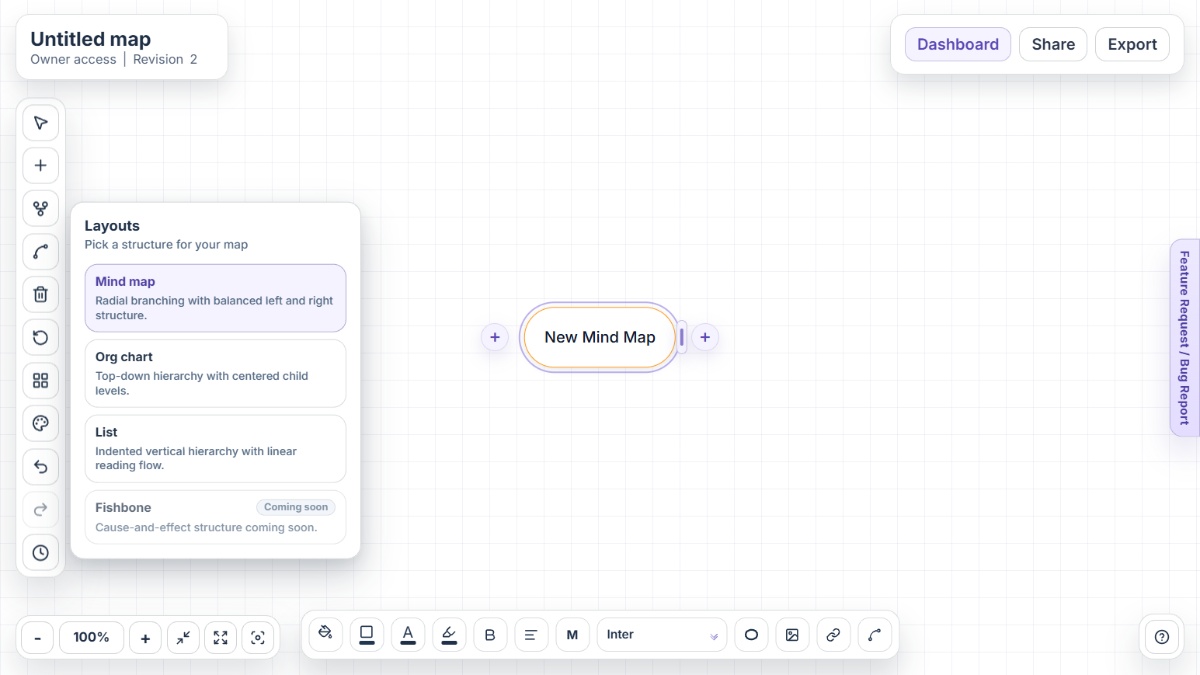
MindMeister is still a popular choice, but teams often revisit their options once usage grows and planning workflows become more demanding. The most common triggers are plan limits, export needs, and collaboration model fit.
The Free tier includes 3 mind maps. For active note-taking, research mapping, and recurring planning sessions, that ceiling can appear in the first week.
Users who need unlimited maps, file exports, and deeper administration typically compare paid plans against alternatives that expose more core capabilities upfront.
Version history appears as 7 days in Personal and all-time in higher tiers, which matters for teams that depend on reliable rollback and long-running documentation.
When maps become document hubs, attachment constraints on lower plans can create friction for teams that rely on visuals, files, and context-rich branches.
Account-based, per-user subscriptions work well for many organizations, but some users prefer a simpler workflow that starts instantly without onboarding overhead.
Mindmap-Maker is a browser-based mind map tool built for fast idea capture, structured planning, and clean exports without signup friction.
Miro approaches mind mapping inside a broader visual collaboration workspace with infinite canvas, presentation tools, and enterprise integrations.
Coggle is a web-based mind map and flowchart tool focused on fast collaboration, visual simplicity, and branch-based thinking.
XMind is a dedicated mind mapping platform emphasizing native-feeling apps, flexible structures, AI-assisted workflows, and cross-device use.
Lucidchart is an intelligent diagramming platform that supports collaborative visual documentation across process maps, org structures, and technical systems.
MindMeister can still work well for many teams, especially when the current limits are acceptable. But if your workflow now needs faster startup, broader export freedom, or a different collaboration shape, switching can remove real day-to-day friction. Mindmap-Maker is the strongest fit for instant no-signup mapping, while Miro, Lucidchart, Coggle, and XMind each serve different planning styles.
Mindmap-Maker is a practical option if your priority is opening the app and mapping immediately without account setup.
A common trigger is the 3-map limit on the free tier, especially for users who map daily for study, planning, or project work.
Yes. MindMeister supports real-time collaboration, including sharing by invite or link with view and edit permissions.
MindMeister lists export support for formats such as PNG, PDF, and Word, with export capabilities tied to plan availability.
Miro is often chosen when teams want mind mapping and whiteboarding together on a shared infinite canvas.
Mindmap-Maker, Coggle, and XMind are often shortlisted by users who prefer a mind map-centric workflow over a broad diagram suite.