
Mind map work can get buried in a broad canvas workflow
Miro is excellent for mixed visual collaboration, but users focused on pure mind maps sometimes prefer tools with a tighter node-and-branch editing experience.
Teams exploring Miro alternatives are usually making a tradeoff: keep the broad whiteboard workspace, or move to a faster mind map-first flow. If your priority is cleaner structure, quicker idea capture, and practical exports, this comparison will help you choose with confidence.
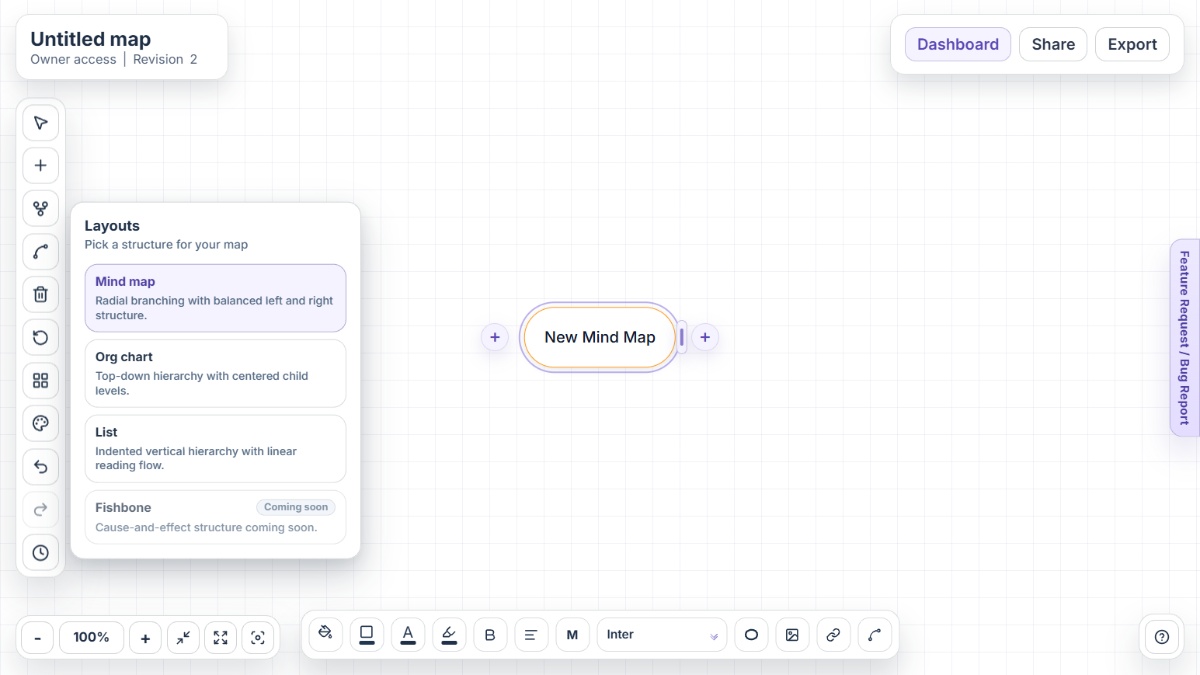
Miro is a strong collaborative whiteboard, but mind map-heavy teams often compare alternatives to improve editing speed, structure discipline, and cost fit for everyday use.
Miro is excellent for mixed visual collaboration, but users focused on pure mind maps sometimes prefer tools with a tighter node-and-branch editing experience.
The free tier allows only 3 active editable boards at a time, so frequent planners often compare alternatives once that limit starts interrupting flow.
As more teammates join workshops and planning sessions, per-member pricing can shift the total cost profile for teams with heavy collaboration needs.
Users who need instant visual thinking sessions often look for no-signup or low-friction tools that let them start mapping immediately.
Different teams prioritize different outputs, such as document-friendly outlines, lightweight image exports, or structured hierarchy views for project planning.
Mindmap-Maker is built for fast, browser-based mind mapping with no signup friction, making it a strong choice for brainstorming, concept mapping, and structured planning sessions.
MindMeister is a dedicated online mind mapping platform designed for structured idea trees, collaborative editing, and straightforward presentation-oriented map communication.
Coggle emphasizes simple collaborative mind mapping and flowcharting, making it appealing for teams that want quick visual structure without heavyweight setup.
XMind is a dedicated mind mapping tool known for strong structure control, multiple visual map styles, and cross-device support for deep individual or team mapping.
Lucidchart is a collaborative diagramming platform that includes mind mapping alongside process diagrams, org charts, and broader visual documentation workflows.
Miro remains a great option when teams need a broad whiteboard environment for workshops and cross-functional planning. If you mainly care about faster, cleaner mind map workflows, a more focused product often feels better in daily work. Mindmap-Maker is the top no-signup option, and MindMeister, Coggle, XMind, and Lucidchart each cover different collaboration and planning preferences.
If your main goal is fast and focused mind mapping rather than broad whiteboarding, Mindmap-Maker is a strong option to start with.
Miro offers a free plan, but only three boards can be active and editable at one time, which is a common reason users compare alternatives.
Yes. Miro supports real-time and async collaboration, including co-editing, commenting, and sharing boards with teammates.
Miro supports exporting mind map content as image and PDF, and teams can also share boards by link for collaborative review.
Common drivers include wanting a lighter interface, lower onboarding friction, and a workflow optimized specifically for node-based idea mapping.
Mindmap-Maker, MindMeister, and Coggle are all collaboration-capable options, with different tradeoffs in workflow depth, structure, and setup speed.